High up on the list of my guilty pleasures is reading comments on online fora. During this year’s visit to Göttingen I came across a surprising opinion of a tourist whose impression was that the city was beautiful but there were too many young people in it. I thought to myself – irrespective of my personal impressions, quite different from the disgruntled globetrotter’s opinion – that it would be hard to find a better description of the atmosphere in one of Germany’s most important centres of scholarship, the home to over forty Nobel Prize winners as well as the university known in Latin as Giorgia Augusta, whose students included the Brothers Grimm, Heinrich Heine and Hugo Steinhaus. Indeed, there are plenty of young people here. The student population alone is equal to that of an average town in Poland – approximately one-fourth of the total number of residents of the Göttingen District’s capital.
Apart from the fact that it is easier to be run over by a bicycle than a car here, Göttingen is quiet, joyful and fairly safe. This may be the reason why the atmosphere at the Händel-Festspiele Göttingen, the world’s oldest Handel festival, which celebrated its centenary in 2020, is decidedly more casual than most of the European festivals of early music. Tradition demands it: after all, the Festspiele is the brainchild of music-making amateurs, lecturers and students at the local university, who had enough audacity a few years after its launch to entice Gunnar Graarud, a star of the Berlin stages at the time, to come to Göttingen and sing in their first staging of Xerxes. After all, one of the first directors of the Deutsches Theater, the venue of festival opera performances today, was a sought-after film actor who starred in two thrillers directed by Hitchcock and died on the set of a musical comedy written by Billy Wilder, a comedy so full of plot twists and secrets uncovered by the protagonists that it would have sent many a Baroque librettist into a fit of envy.
It’s been seven years since I found myself at this wonderful event for the first time – quite by chance really, as I was in Göttingen for entirely different reasons. I was lucky to witness the last few years of Laurence Cummings’ musical tenure and now I watch with admiration how George Petrou, who has taken over the reins from Cummings, continues the festival’s established programming line, enthusiastically attracting an increasingly younger audience – also thanks to special concerts for children as well as family-friendly versions of operatic productions. The motto of this year’s Händel-Festspiele was VERLOCKUNG or “enticement”. It was hard not to succumb to it, even if only for three Festspiele days, which I had chosen carefully, complementing a performance of Handel’s Deidamia with concerts in Göttingen and at the Welfenschloss in nearby Münden, where the Weser River originates from the confluence of the Werra and the Fulda.
Unfortunately, due to the cancellation of some services, I was unable to attend a performance by the flautist Erik Bosgraaf and the Italian ensemble filoBarocco playing “Polish-Moravian” music by Telemann, who in 1705 took up the post of Kapellmeister to Count Erdmann II Promnitz, Lord of Żary, which enabled him to travel even farther, including to places like Pszczyna and Kraków. Fortunately, I was able to get to the evening performance of Handel’s Messiah at the Stadthalle, to which I had been particularly looking forward, because it featured several soloists I knew and admired, but mainly because of the FestspielOrchester Göttingen, which is celebrating its twentieth anniversary and has confirmed its versatility in recent seasons, easily adapting to Petrou’s spirited interpretations and his preferred expressive, pungent and juicy sound aesthetics.
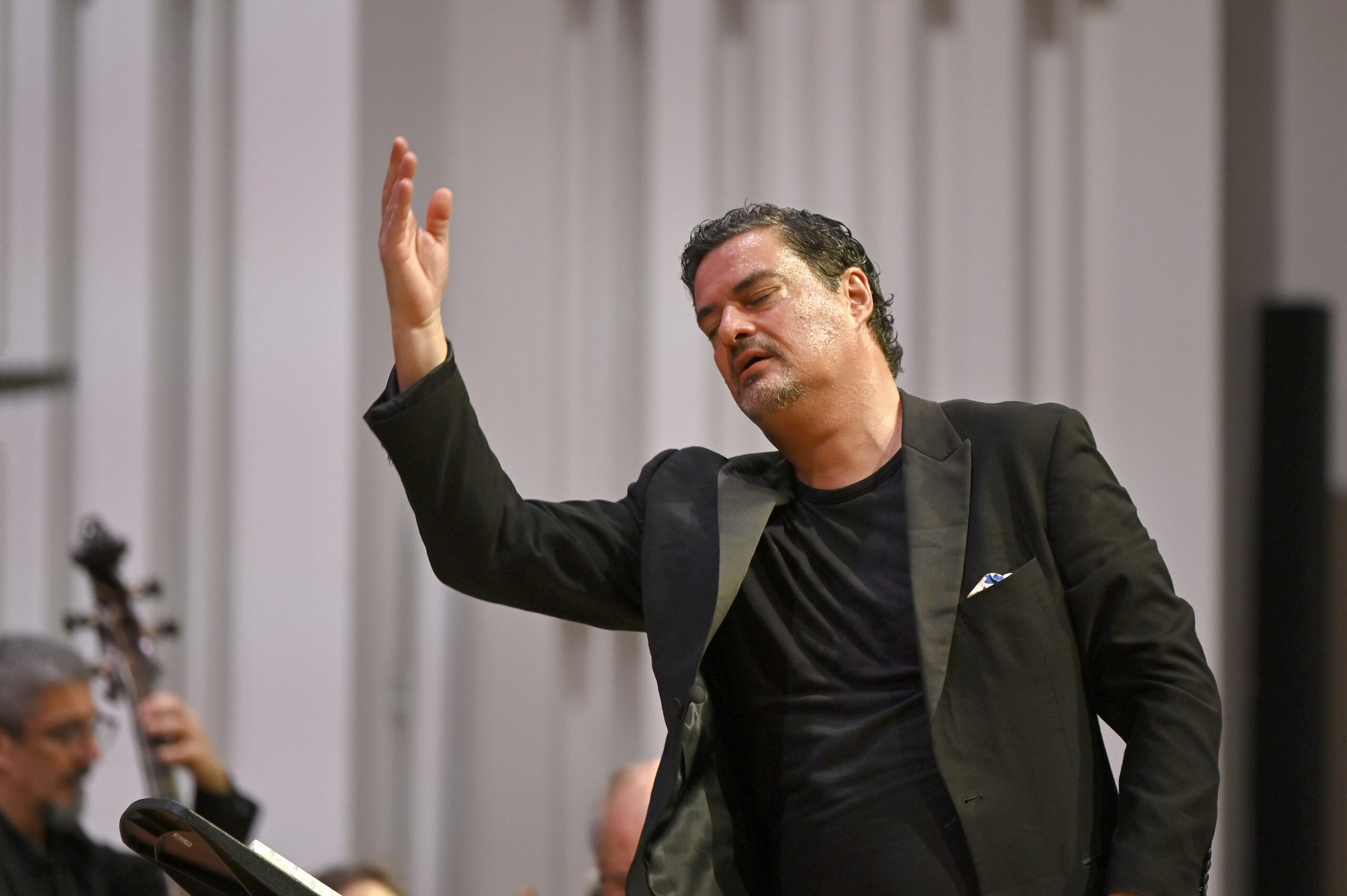
George Petrou. Photo: Alciro Theodoro da Silva
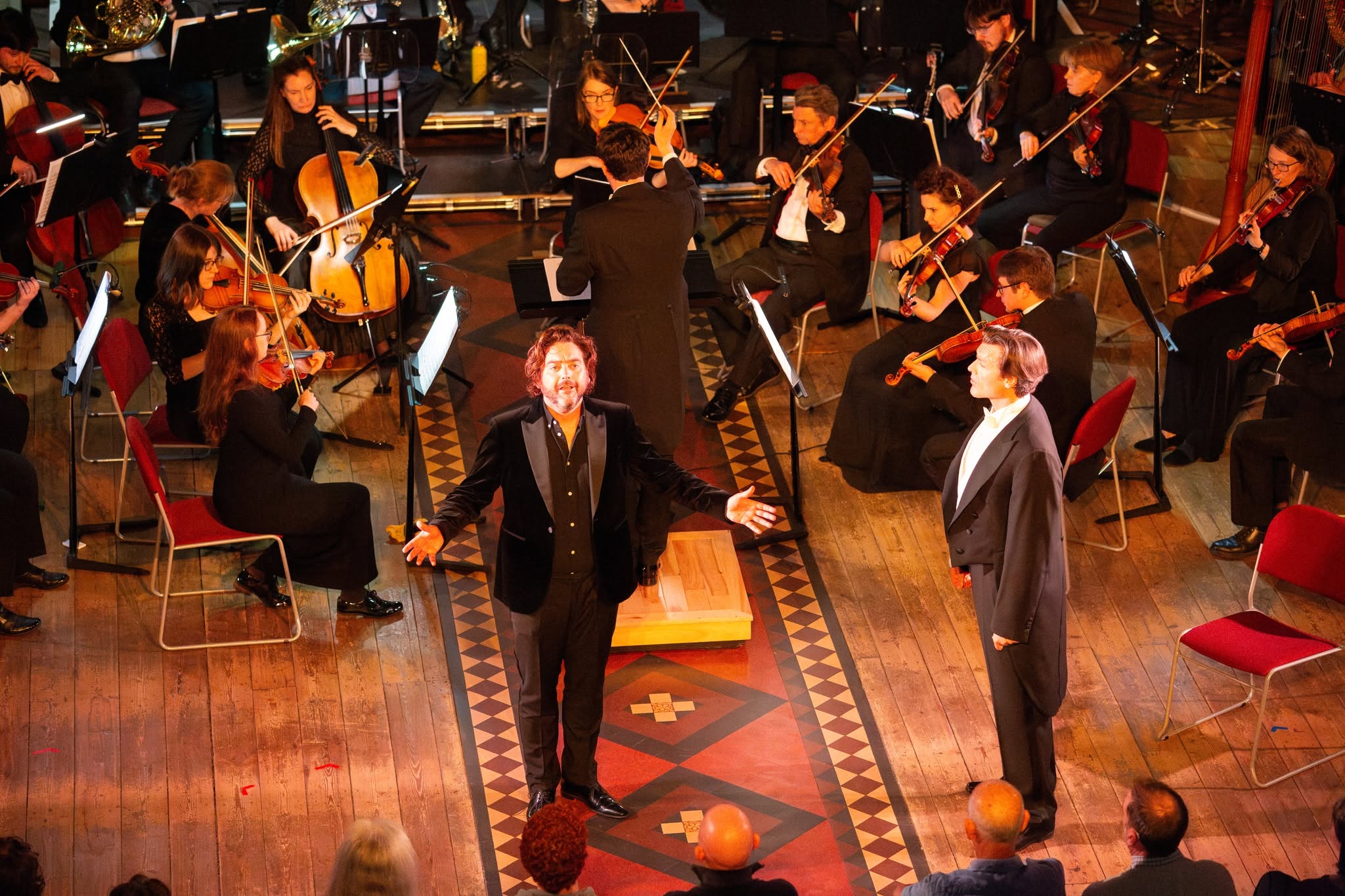
Yet this time it was the sound that was lacking, primarily because of the acoustics of the Stadthalle concert hall, ruined effectively – and probably irreversibly – during the thorough renovation of the modernist edifice. As it often happens these days, sight has won over hearing. The design by the German studio soll sasse architekten was showered with awards. No one thought that reconstructing the Grosser Saal on a larger scale and using different materials would have such a significant impact on its acoustic properties. I hope that with time the festival oratorio concerts will return to previous venues – in the case of Messiah the problem was further compounded by the fact that the NDR Vokalensemble was placed at the back of the stage, behind the orchestra, in a nineteenth-century style. As a result, the choral fragments, so important in this masterpiece, were heard as if through a mist, the text did not reach the audience – instead of being an equal participant in the narrative, the ensemble was relegated to the role of insignificant accompaniment. The orchestra, too, got off to a difficult start, from the very beginning sounding uneven when it came to intonation and, at times, also rhythm. I also wondered about the criteria for selecting the soloists, who were without exception talented artists with experience in this repertoire, though not necessarily a good fit for the vision of George Petrou, who, presumably, wished to remain faithful to the composer’s intentions.
The best among the four soloist was the tenor Ru Charlesworth, a former prize-winner at the Cesti-Wettbewerb in Innsbruck, a passionate singer with a still youthful sound, and, most importantly, peerless teller of the story of the Messiah’s life and death as well as the anticipated salvation of the souls (a phenomenal “Ev’ry valley shall be exalted” from the Isaiah’s prophecy scene). In this respect he was superior to the Canadian baritone Drew Santini, whose voice is far less expressive and marked by a small but persistent vibrato, not always consistent with his interpretation. The mismatching problem was especially evident in the case of the two ladies: Ana Maria Labin, whose soprano is light and resonant, shimmering like quicksilver; and Lena Sutor-Wernich, whose powerful, deep alto has a tenor-like quality in the lower register. Handel wrote the alto part in Messiah especially for Susannah Maria Cibber, an excellent actress and amateur singer, whom the composer appreciated above all for her “sweet voice” and extraordinary power of interpretation. Yet Sutor-Wernich’s alto brings to mind Wagner’s Erda or Gea from Strauss’ Daphne, both when it comes to the sound and style of expression, which was particularly evident in the duets.
The above reservations stem solely from the fact that Petrou has got me used to performances pulsating with energy and, at the same time, thought-out in every detail. Fortunately, two days later he more than made up for any doubts relating to the Messiah performance. Before this happened, however, I had listened to some other festival concerts, each of which deserves a separate mention, despite their different statures and experience of the artists.
I will start with one of “out-of-town” events, at the Welfenschloss in Münden, which attracts a slightly different audience: made up of the locals as well as music lovers, who, thanks to a guided tour organised by the festival, can combine an encounter with music at the residence of the Princes of Brunswick-Göttingen with a walk around this small town, famous of its beautiful half-timbered houses. The programme of this year’s concert, entitled “Ein feste Burg”, a title borrowed from Martin Luther’s hymn, featured works by composers active in Lübeck during the Thirty Years’ War, which passed the city by, but marked the end of its former glory. Among the performers were participants in masterclasses devoted to the music of Hanseatic cities – as part of the Europäisches Hanse-Ensemble project, launched in 2019. The ensemble, led by Manfred Cordes – for many years a professor and former rector of the Hochschule für Künste Bremen – performs each season with a different line-up, supported by artists experienced in this repertoire (like the gambist Hille Perl and the soprano Ulrike Hofbauer, who joined it this year). I was amazed by the stylistic variety of this repertoire, from chorale cantatas, Venetian-style motets, to dances and other small instrumental pieces, in which the local north German traditions are combined harmoniously with Italian, French and English inspirations. I was delighted by the solo cantata Ach Herr, lass deine lieben Engelein by Franz Tunder – Buxtehude’s father-in-law and his predecessor as organist at St. Mary’s Church in Lübeck – with the same text by Martin Schalling the Younger that Bach used in the final chorale of his St. John Passion. I was moved by the listeners who recognised in many compositions melodies known to them from church services, but “performed so much more nicely”.
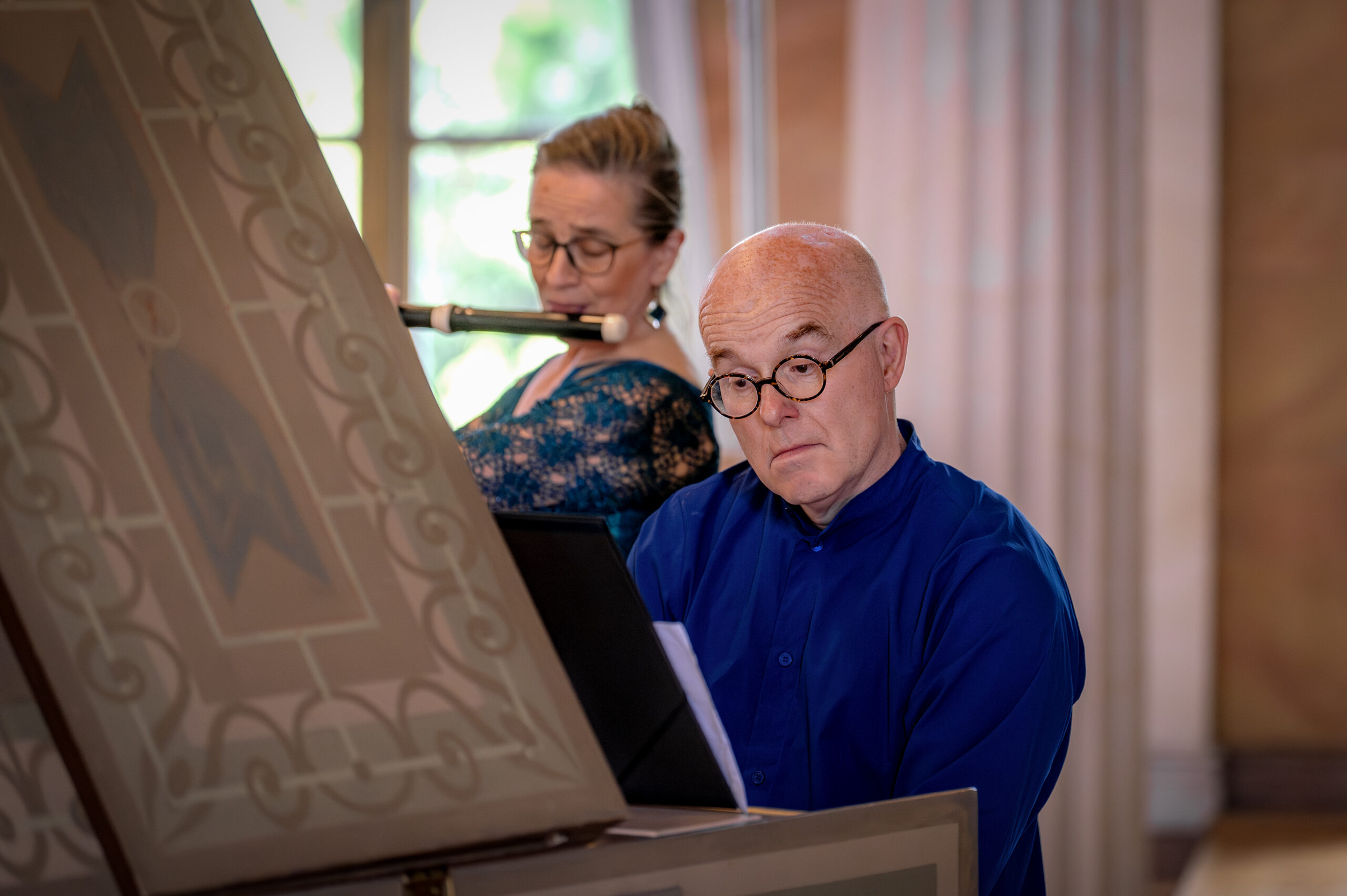
Rachel Brown and Laurence Cummings. Photo: Alciro Theodoro da Silva
I expected a lot from Laurence Cummings’ return to the festival, to which he devoted ten years of his life. However, I did not expect that during the concert at the University Hall, where the harpsichordist appeared alongside the legendary flautist Rachel Brown, everything would go in line with the title “To Melt a Stony Heart”. This was not another musical tale by the charismatic artist, who – much to the audience’s delight – can transform any Baroque opera into a masterful one-man show, combining the roles of a compère, a singer and an accompanist. This was a true treatise on the nature of music, worthy of Orpheus himself – a two virtuosos’ tale of how to charm the listeners, how to captivate them not only with the content, but also with the form, built on a strong structural framework featuring appropriate ornamentation, skilfully repeated rhythmic figures and clear articulation. How to build up the tension in order for the audience not to melt like wax too soon, to keep their attention with a lively dialogue between the performers, with focused singing from the keyboard and a poetic passage woven into the narrative. Brown and Cummings led us through the oeuvres of Baroque Orpheuses – from Couperin, Campra, Lully and Vivaldi, to Handel and Gluck. And it was indeed as if shadows wept, as if the heart of the lord of the underground himself melted. I still hear the magnificent sarabande “Le Départ” from Hotteterre’s Flute Suite in E minor. I will remember for a long time the aria “Cara sposa”, ending the first part of the concert, in which Cummings sang from harpsichord Rinaldo’s despair after the loss of the abducted Almirena. The two artists were the source of one of my most beautiful experiences in recent years, not just in Göttingen.
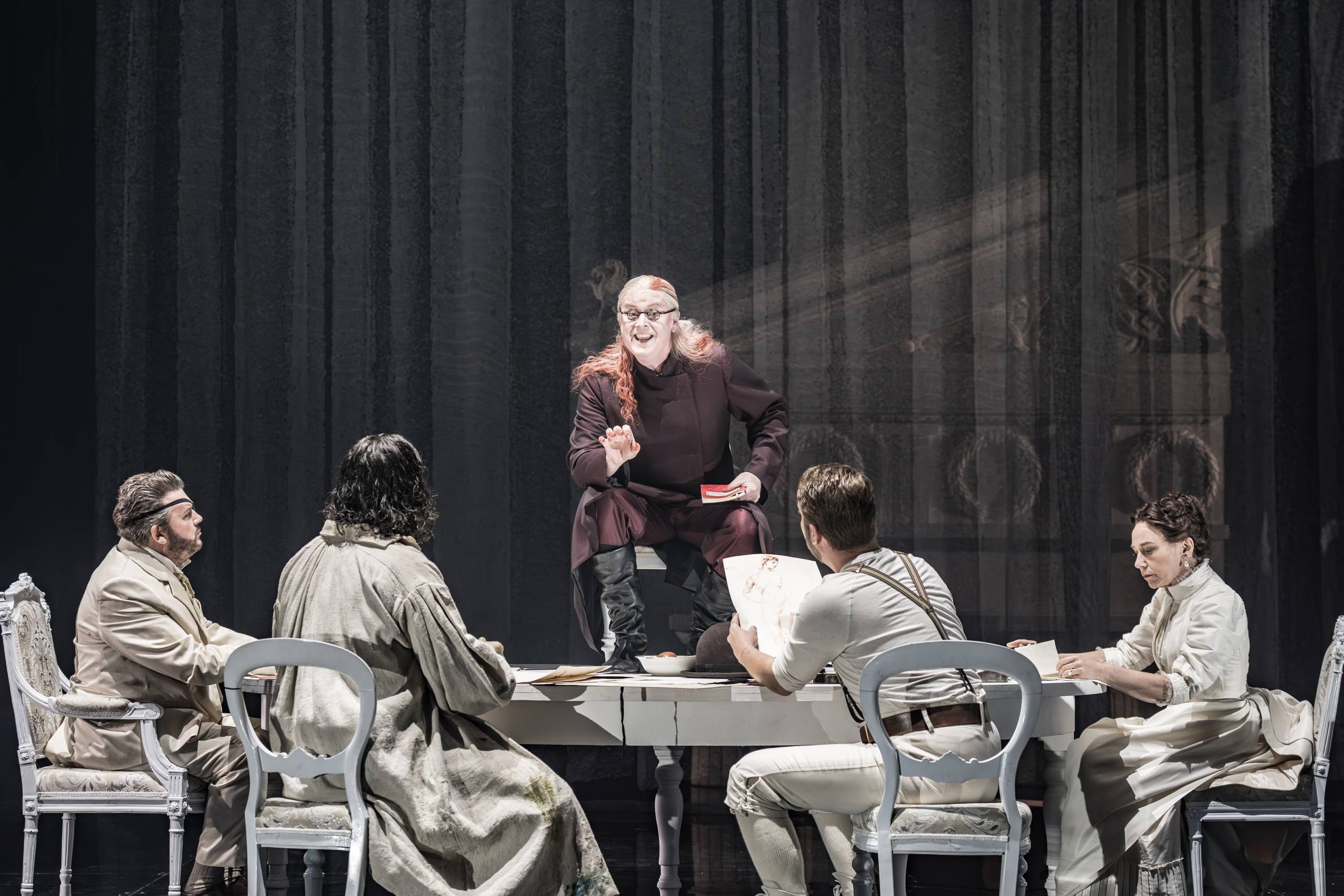
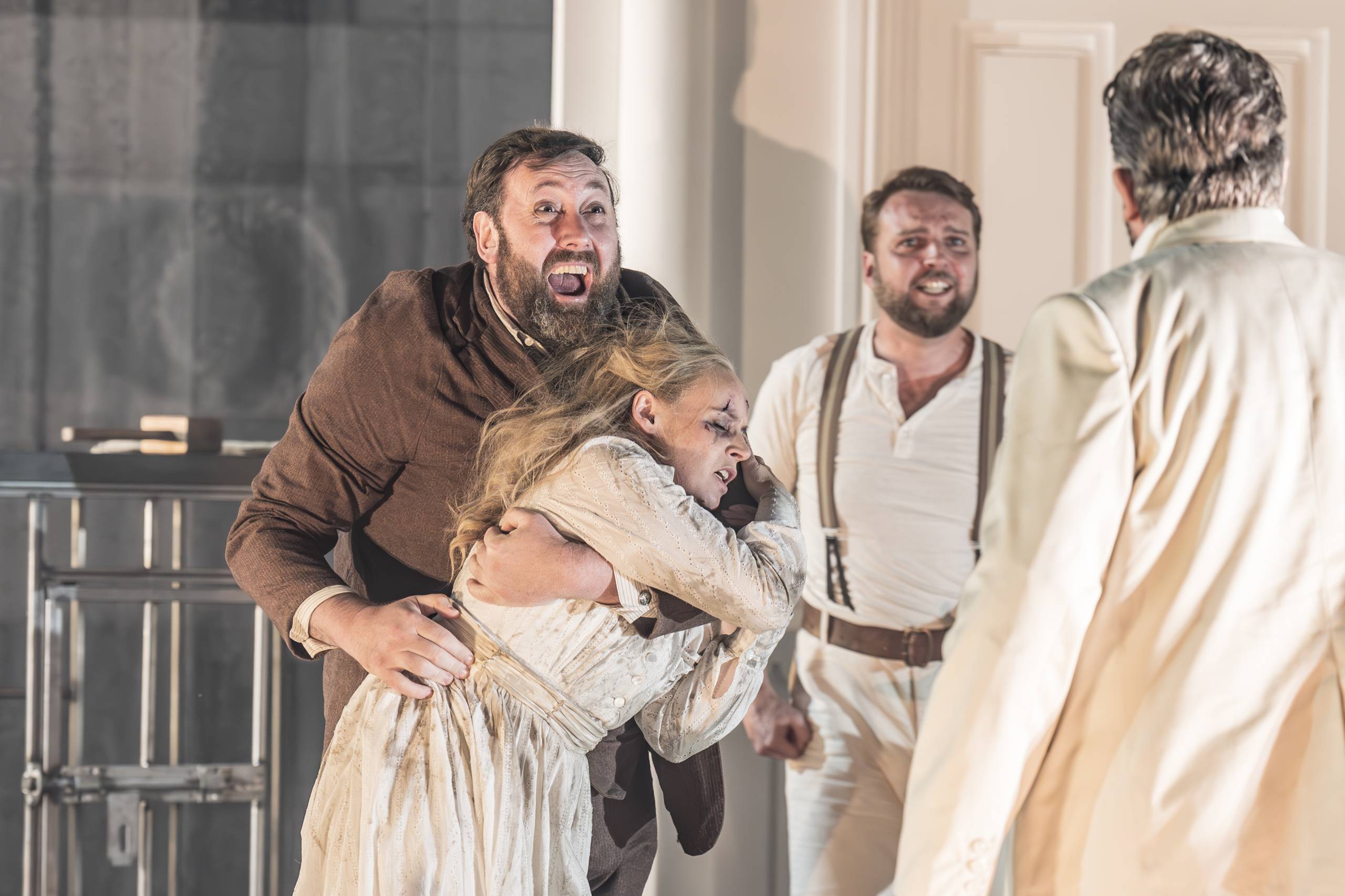
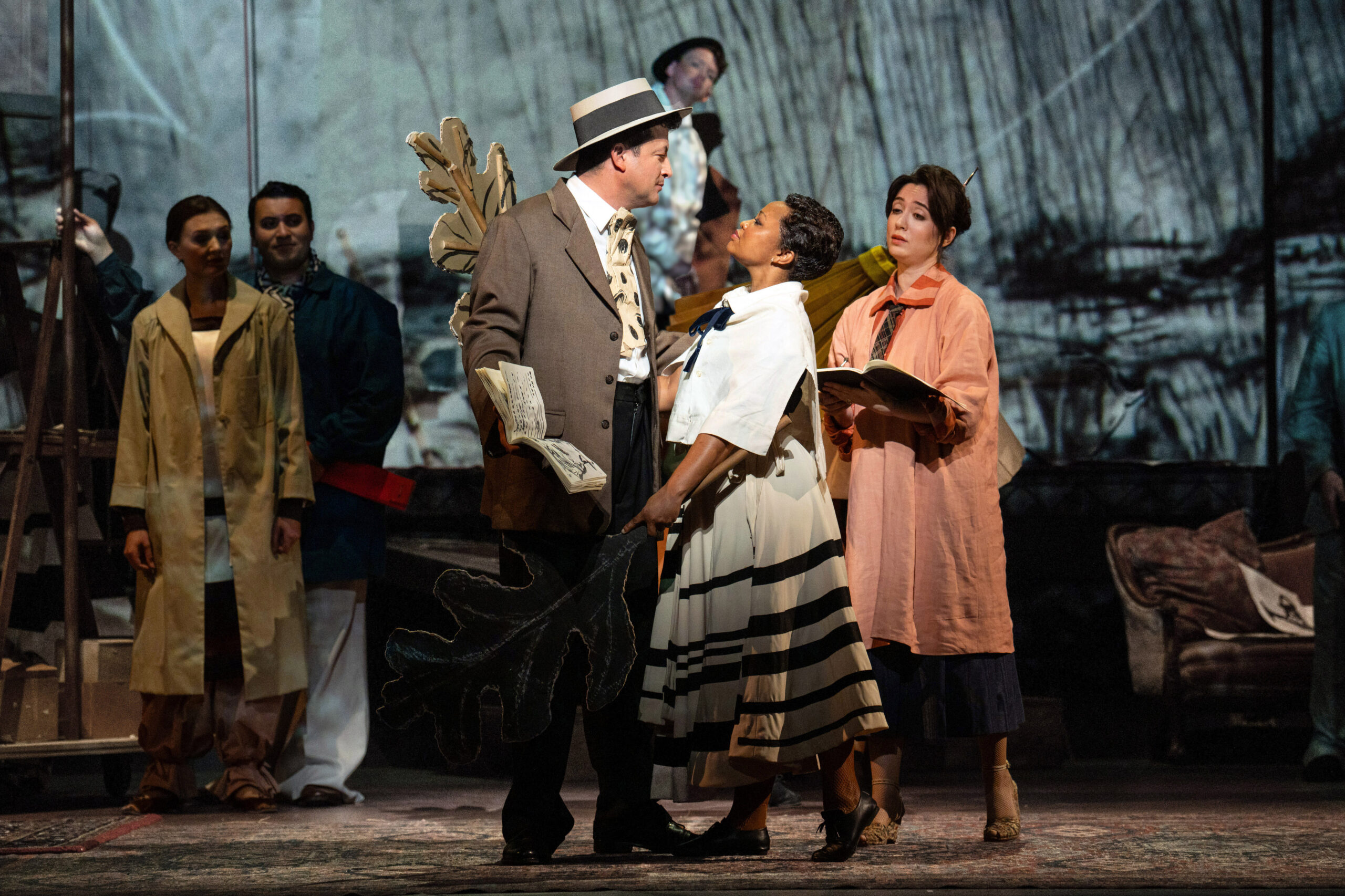
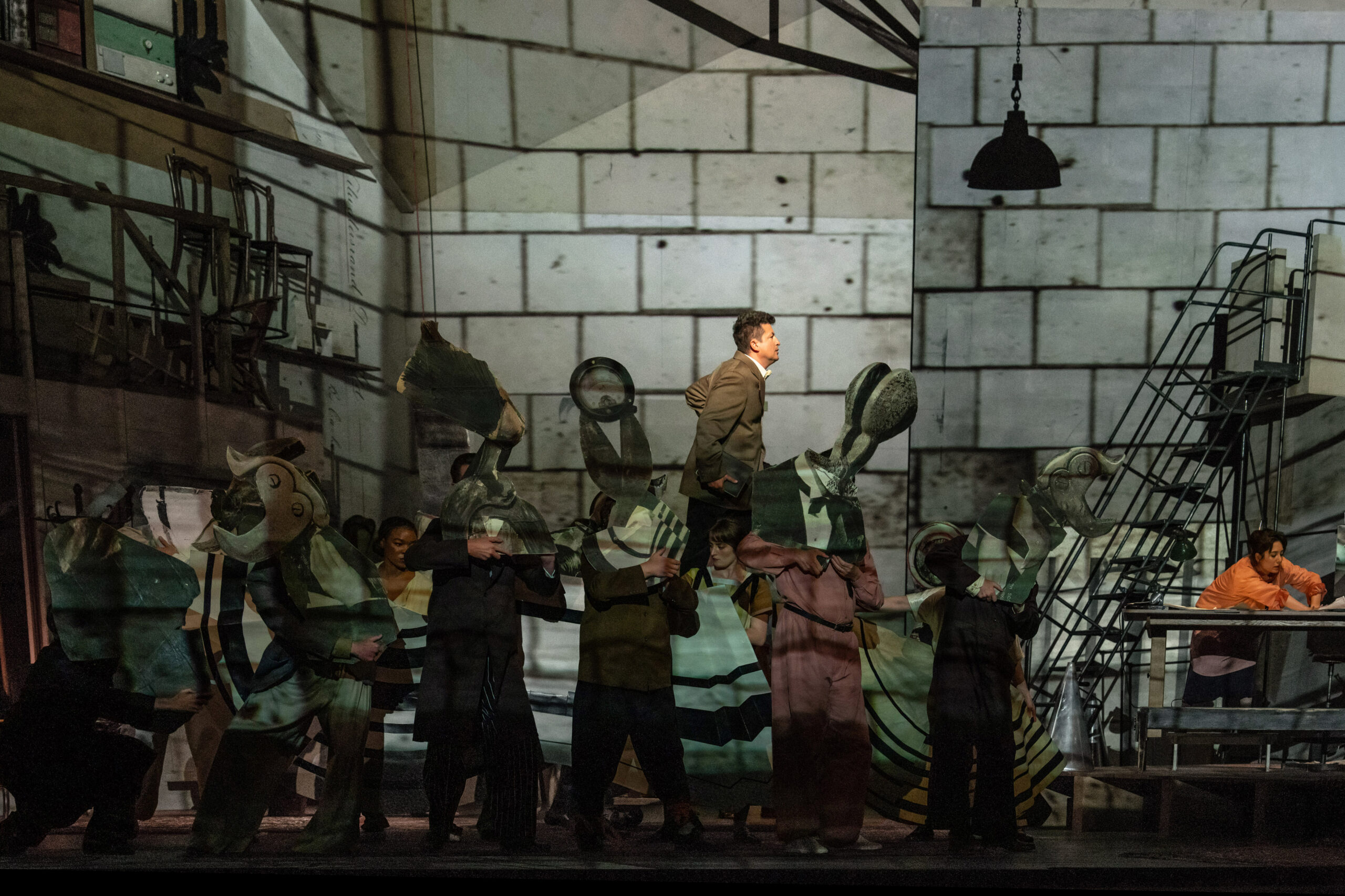
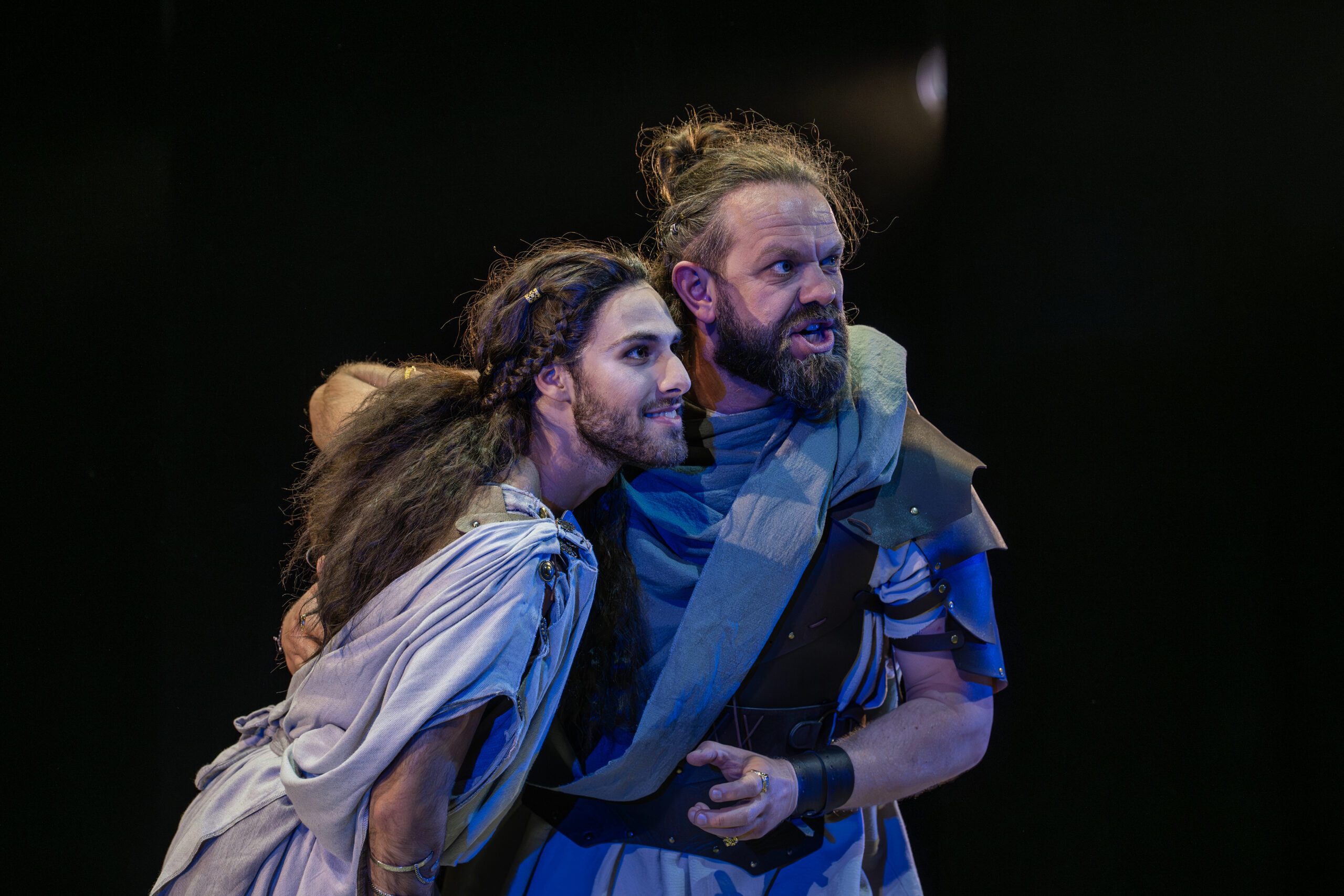
And the very next day I was in for an experience that was just as intense: the festival’s closing performance of Deidamia, Handel’s last Italian opera, which proved to be undoubtedly one of the best productions of George Petrou’s tenure. His boundless energy at the conductor’s desk and his unique sense of humour, to which he gives free rein in each of his projects, found the perfect outlet in this work. Deidamia was written to a libretto by Paolo Antonio Rolli, who presented the mythical story in a slightly different and more playful manner than Metastasio in his Achille in Sciro. The story of Achilles, son of Thetis, who decided to save her son from certain death at the walls of Troy by hiding him, disguised as a girl, on the island of Skyros, where he fell happily in love with Deidamia, one of the daughters of the island’s king, Lycomedes, was enriched by Rolli with a number of subplots. Before Ulisse, arriving on Skyros in search of Achille – whom everybody except Deidamia believes to be a fair maiden named Pyrrha – manages to reveal his true identity and persuade Achille to go to war with him, he himself will begin to flirt with Achille’s beloved. In turn, Fenice, Ulisse’s companion, makes advances towards Pyrrha. Unsurprisingly, this will give rise to numerous misunderstandings and scenes of jealousy. In the end Fenice will settle for Nerea, Deidamia’s confidant, Ulisse will fulfil the mission entrusted to him and everything will end with the mandatory lieto fine, that is the marriage of the king’s daughter to Achille, who is preparing to set off for Troy.
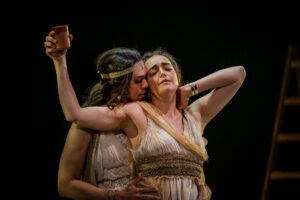
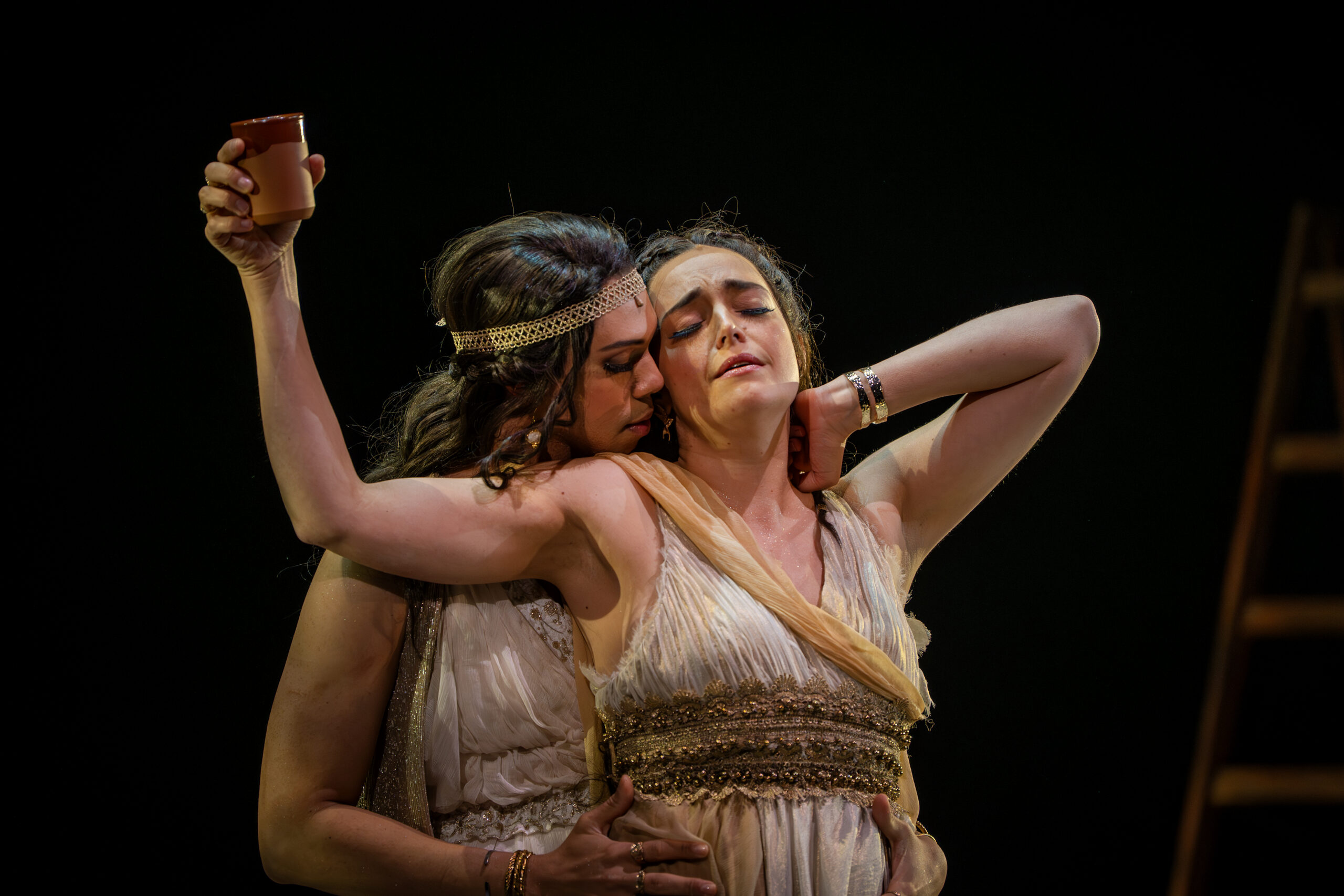
Deidamia. Bruno de Sá (Achille) and Sophie Junker (Deidiamia). Photo: Alciro Theodoro da Silva
Rolli’s mad libretto, full of plot twists, enabled Handel to weave a number of comic elements into this melodramma. Unfortunately, the cunning plan of making the Londoners interested again in Italian opera – going out of fashion at the time – failed. Deidamia was performed at the Lincoln’s Inn Fields Theatre only three times and went silent for more than two hundred years. Despite tentative attempts to revive it in the twentieth and twenty-first centuries, it proved impossible to bring it back to the repertoire. Until October 2025 that is, when a production directed by Petrou, with splendid sets by Giorgina Germanou, was presented for the first time at the Wexford Festival – with the same conductor and the same cast. We commented on a recording of that event with Marcin Majchrowski on the Polish Radio Two. Dazzled by the performance, we complained about the crisis of Handel’s invention, still not predicting any success for the opera.
It was only in Göttingen that I realised that the critics’ enthusiasm at the time had been entirely justified. What carries this Deidamia forward and up is an extraordinary synergy between the musical and the theatrical side of the production, giving the artists not only freedom, but also authentic joy of spinning this convoluted tale. The undisputed star among the cast is Sophie Junker in the title role. She captivates the audience not only with her acting talent and her beautifully rounded, soft soprano, but also with her phenomenal technique and mastery of the rules of stylistic ornamentation (which she demonstrated already in the showpiece aria “Nasconde l’usignol” in Act I). Despite an indisposition, manifested in slight intonation problems, Sarah Gildford gave a fine performance as Nerea with her fresh, warm and irresistibly sensual soprano. The two future heroes of the Trojan War – Achille and Ulisse – were portrayed by Bruno de Sá and Nicolò Balducci, respectively. These two outstanding artists have recently caused quite a stir in the world of historically informed performance. Both have voices Handel did not even dream of in Italian opera: de Sá – a genuine male soprano with an extensive range, Balducci – a very handsome soprano countertenor, which, as it turned out, sounds excellent also in a slightly lower tessitura. In the original cast of Deidamia the part of Achille was entrusted to the teenager Mary Edwards, another singing actress, who played characters of the opposite gender also later on in her career. The role of Ulisse was written by Handel for a mezzo-soprano castrato. I would, therefore, venture to say that de Sá’s and Balducci’s involvement in this tragicomedy of errors and mistaken identities fully meets the criteria of the historical convention. The baritone Rory Musgrave did well in the role of Fenice, written for a high bass, while the velvety-voiced Petros Magoulas was outstanding in the bass role of the equable king Licomede. And everybody had great fun, including the orchestra of the Festspiele Göttingen, playing under Petrou’s baton in the typical Handelian pitch of 422.5 Hz.
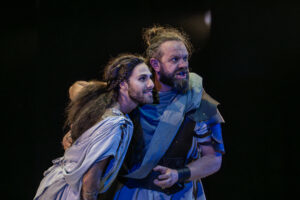
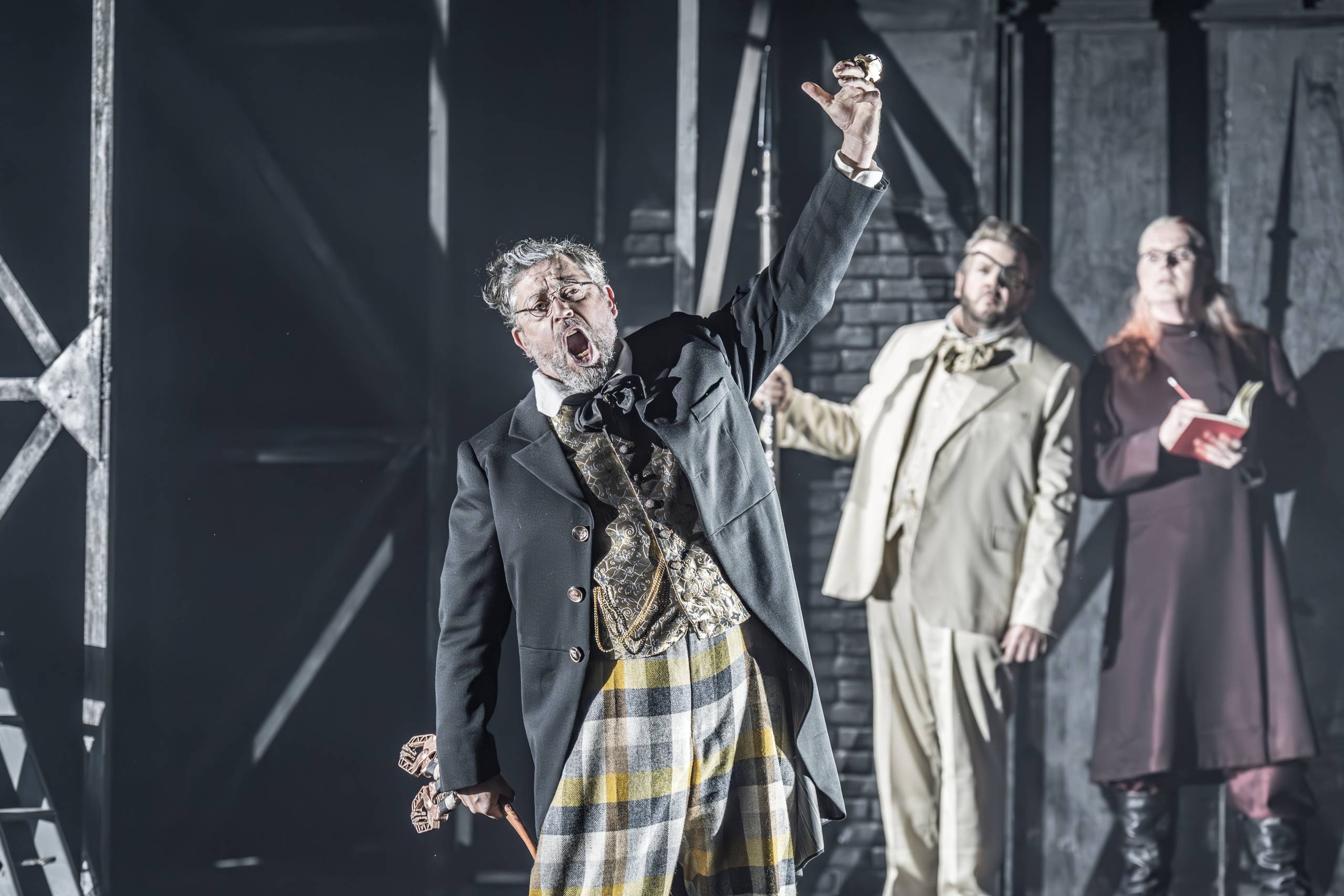
Deidamia. Nicolò Balducci (Ulisse) and Rory Musgrave (Fenice). Photo: Alciro Theodoro da Silva
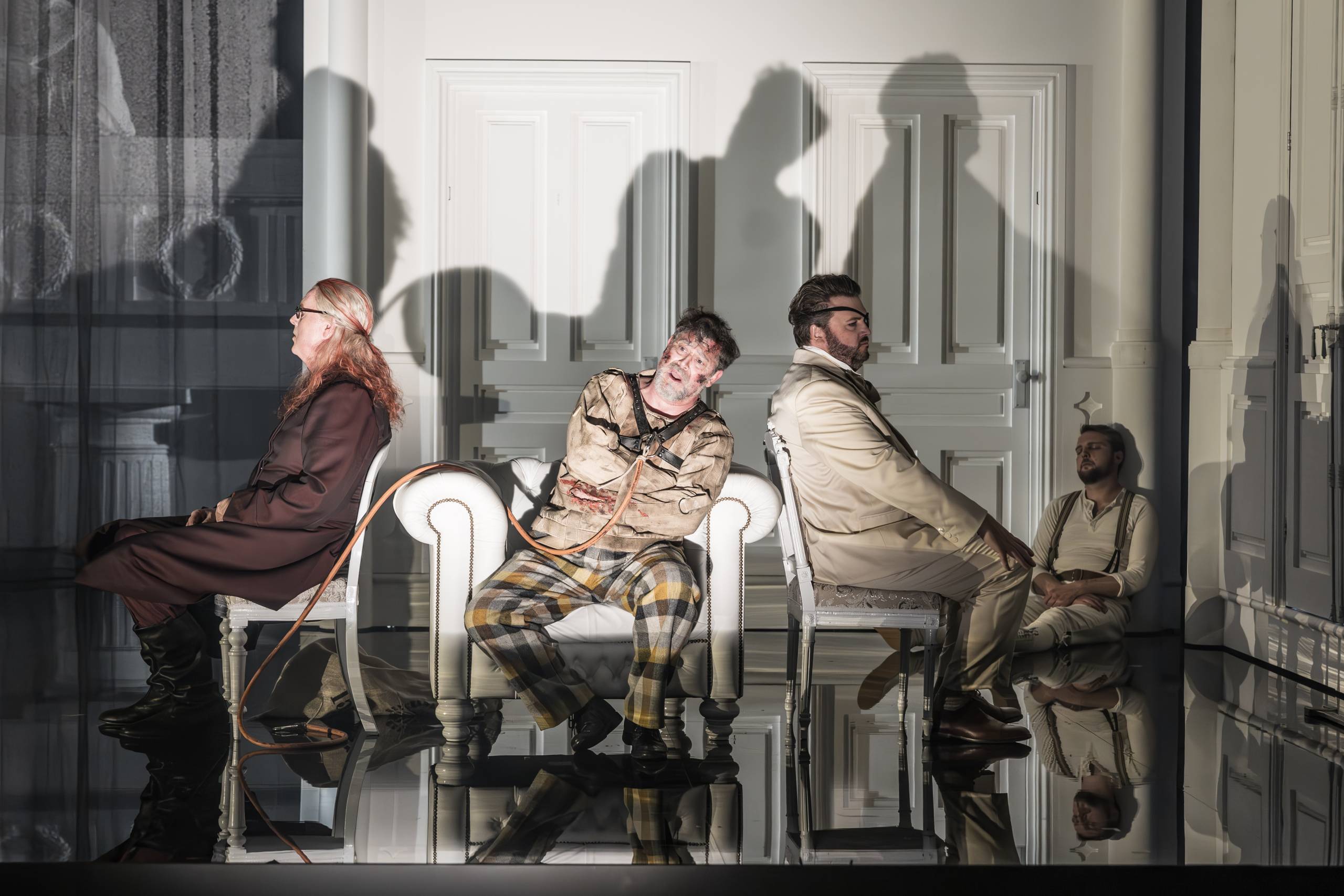
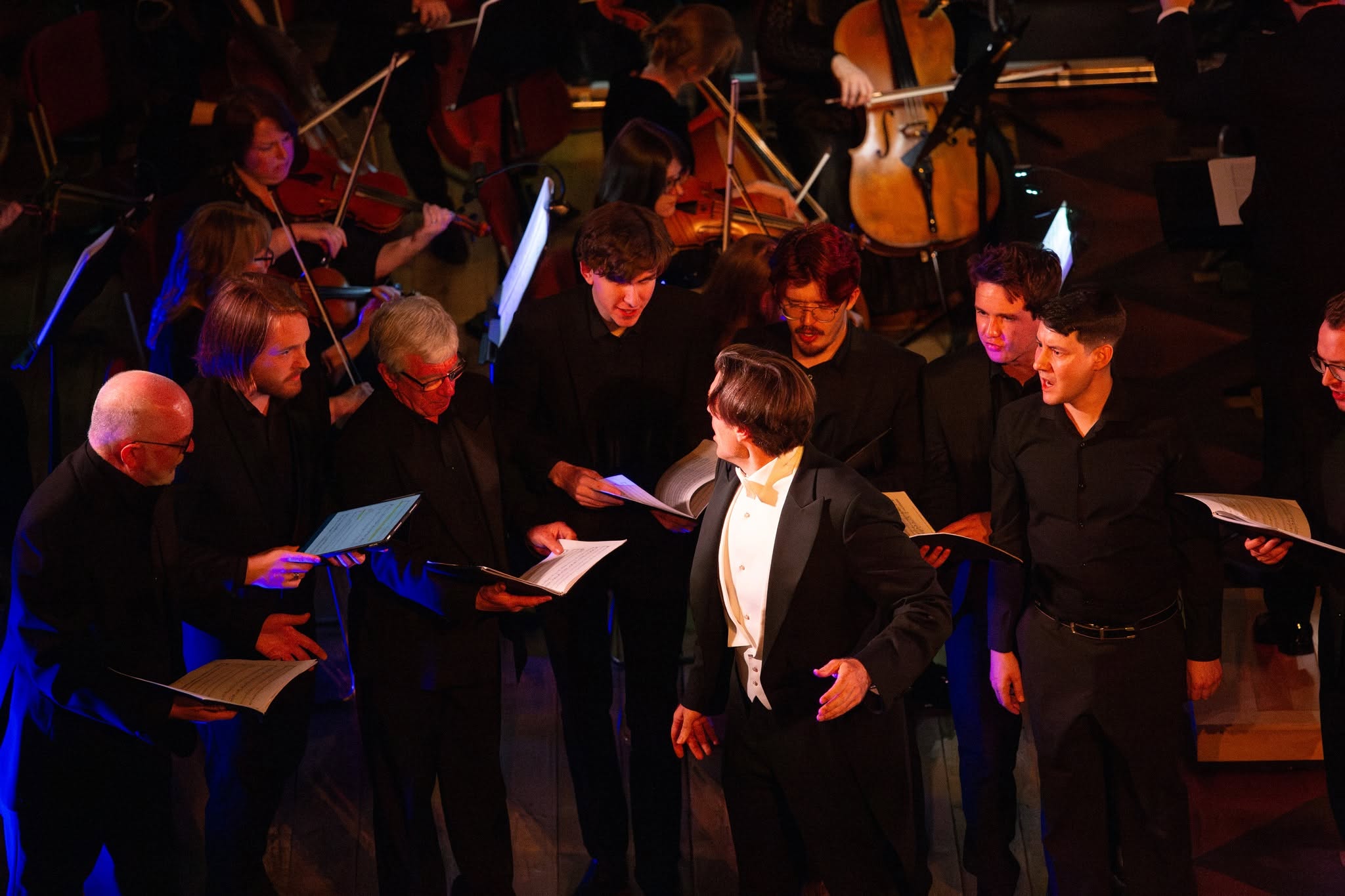
There would not have been so much fun, if it had not been for the staging – as handsome as it was mischievous. Petrou has the action take place on two temporal planes. The adventures of the mythical heroes unfold in parallel with a thoroughly modern themed trip to the island of Skyros (the tourists are played by members of the university choir, who are present on stage far beyond the requirements of their musical duties). The comic tension has its source in the fact that the representatives of the two worlds do not realise their co-existence and even if they do notice that something strange is intruding into reality, they are unable to interpret it. Nerea finds a suitcase on the beach, starts rummaging through it, and, disconcerted, pulls out a bra and a box of tampons. Something is knocking over the Sunday painter’s easel, though there is not a breath of wind. Licomede muses over peaceful old age amidst the depths of the sea, where an ancient treasure hunter is diving. Achille aims his bow at a cardboard doe at a shooting gallery. And yet everyone in this crowd grapples with their own dilemmas; they suffer and love in the same manner, and are overcome by bouts of equally painful jealousy. The group of holidaymakers even includes a suspiciously tall and sinewy lady who in the end will turn out to be a man.
I might have missed all these little details had I not been translating a book by a classical philologist who first allowed his elderly father to attend a student seminar on the Odyssey, and then took him on a themed cruise following in the footsteps of Homer’s hero. Petrou’s idea for Deidamia may not be as intricate as my author’s prose, but it does come down to a similar conclusion: in many respects the heroes of Troy were no different from today’s holidaymakers. Present-day tourists, too, can be killed one day: in another Trojan War, worthy of our times.
The organisers of the Händel-Festspiele Göttingen deserve credit for leading us into temptation for the works of bygone eras to make us think and to genuinely care about them.
Translated by: Anna Kijak